The Short Answer
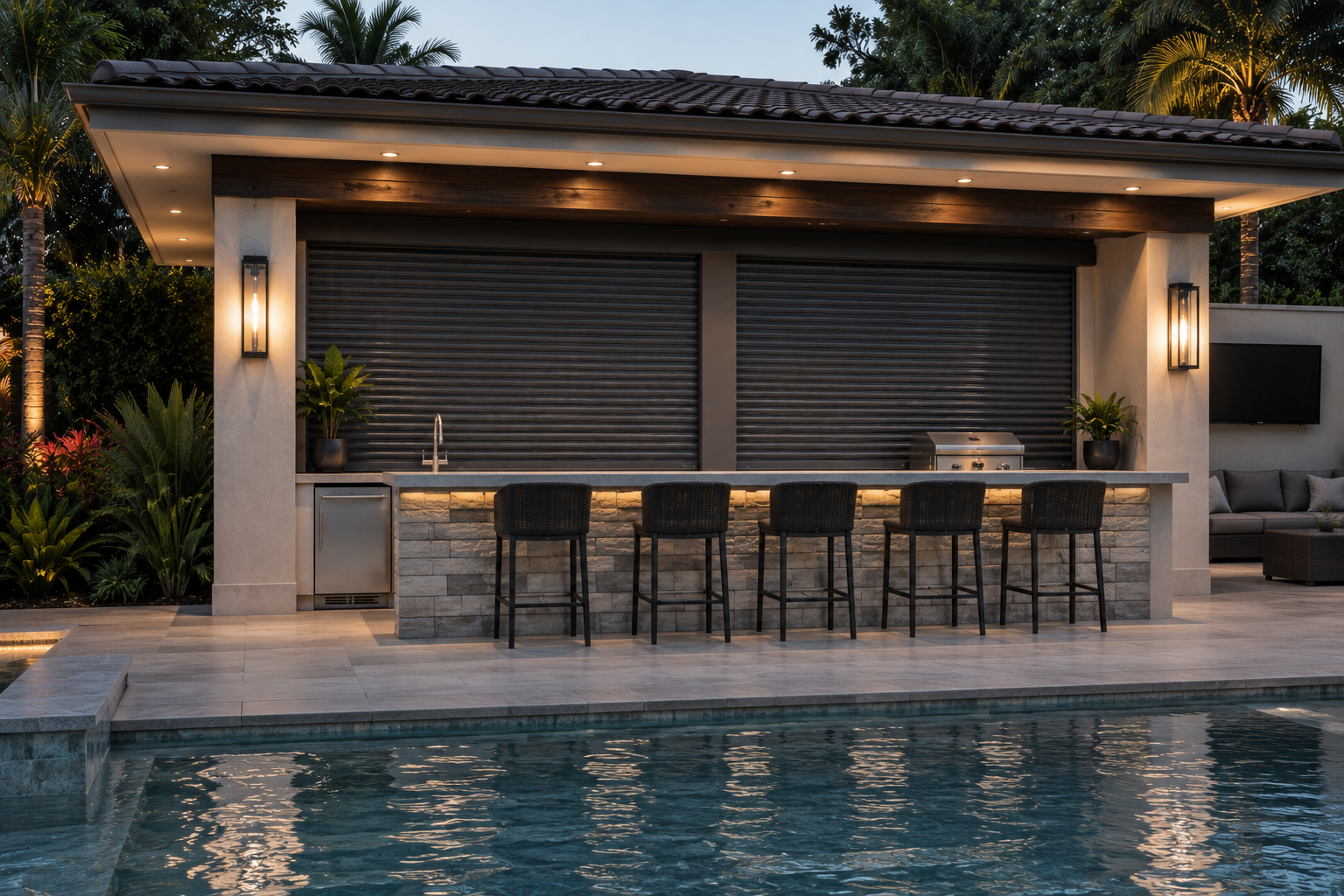
If you own an outdoor living space in Florida, hurricane protection isn't one product — it's a system. Motorized hurricane screens seal off lanais and pool cages in under a minute. Alutech roll shutters protect windows and doors with impact-rated aluminum. Bahama shutters do double duty as sun control and storm protection. And if you're investing in a new pergola, an Azenco system engineered for 190 mph winds means the structure itself isn't the thing you're worried about when a storm's in the Gulf.
None of these products compete with each other. Most well-protected Florida homes use two or three of them together. The mistake I see homeowners make — from Gainesville down through Jacksonville, Pensacola, Destin, and Panama City — is assuming one product covers every opening and every risk. It doesn't. Here's how to think about it correctly.
What Actually Gets Damaged in a Florida Hurricane
Most outdoor living damage doesn't come from the wind itself — it comes from wind-driven debris and pressure changes. A pool cage screen tears, and suddenly your lanai is taking on rain sideways. An unprotected window takes a hit from a branch or patio furniture that wasn't secured, and the pressure change from that broken opening can put stress on the rest of the structure.
North Florida homeowners sometimes assume hurricane protection is a South Florida problem. It isn't. Gainesville, Jacksonville, Pensacola, Destin, and Panama City have all taken direct hits or significant storm surge and wind events in the last two decades. The building codes reflect that. Your outdoor living protection should too.
Hurricane Screen Systems: How They Work
Motorized hurricane screens mount above your lanai, patio, or pool cage opening and roll down on tracks — either by wall switch, remote, or phone app. When they're up, you get an open-air outdoor living space. When a storm's coming, you close them in under a minute, and the screen fabric (rated for wind-driven debris impact) seals the opening.
The real value is speed. A hurricane watch can turn into a warning with only a day or two of runway. Systems you have to physically install — plywood, temporary panels — take hours and require you to be home and able-bodied to do it. A motorized screen system is already there. You press a button.
Alutech Roll Shutters for Windows and Doors
Alutech roll shutters are aluminum slat systems that roll down over window and door openings, either by hand crank or motor. They're built to meet Florida's impact standards, which means they're tested against large missile impact and the pressure cycling a hurricane puts on a structure.
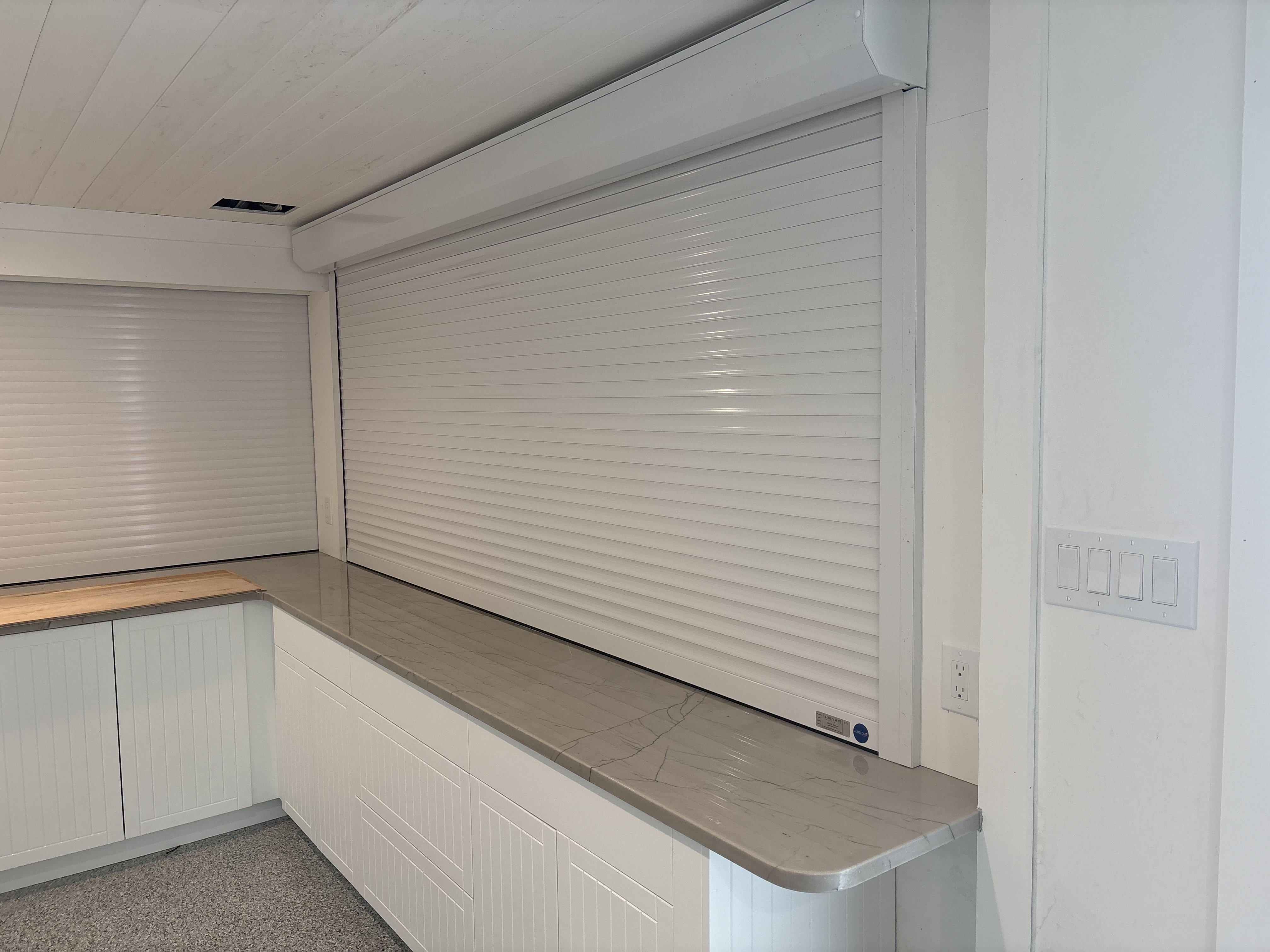
Where hurricane screens protect open-air living spaces, roll shutters protect the glass openings on the house itself. Homeowners who want full-home coverage typically pair the two: screens on the lanai or pool cage, roll shutters on windows and doors.
Bahama Shutters: Shade Today, Protection When It Matters
Bahama shutters hang above the window opening on a hinge and prop open at an angle — so on a normal day, they're cutting glare and heat off the glass while still letting light and air in. Before a storm, you drop them flat and latch them down, and with hurricane-rated hardware, they become a protective barrier over the glass.
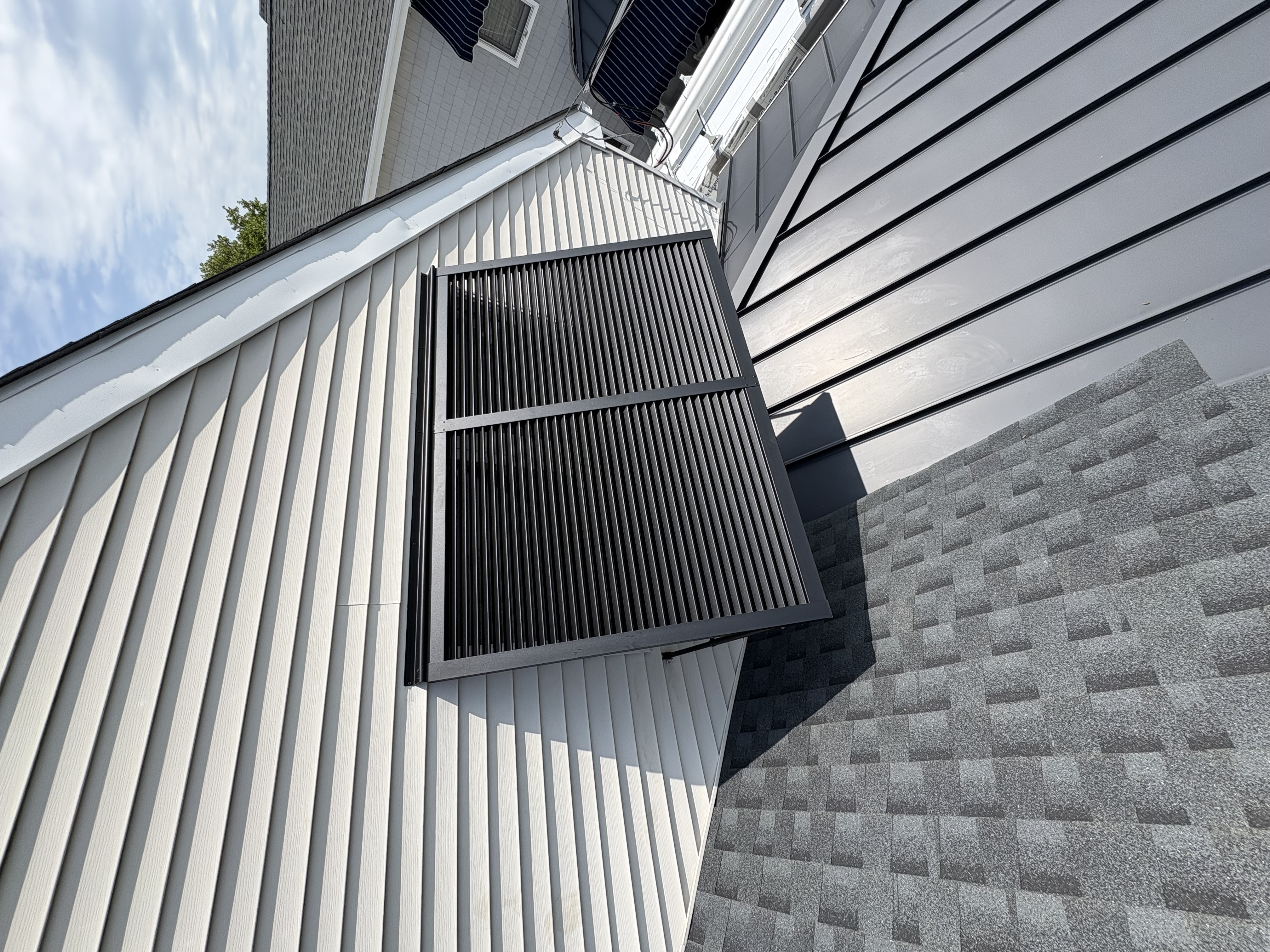
They're a favorite for coastal and shore-style Florida homes because they do a job every single day, not just during hurricane season. That's the appeal — the storm protection is a bonus feature on top of a product you're already using. You can see the full range on our Exterior Shutters page.
The Azenco Pergola's 190 MPH Wind Rating — What It Actually Means
If you're adding a motorized louvered pergola to a Florida property, the structure itself needs to survive the wind load, not just the openings around it. Azenco's aluminum pergola systems are engineered to withstand winds up to 190 mph — well above the sustained wind speed of even a Category 5 hurricane at landfall.
That rating comes from the aluminum frame engineering and the way the structure is anchored, not from closing the louvers. In practice, it means the pergola isn't the weak point in your outdoor living space. The louvers close to shed rain in an afternoon storm; the frame itself is built for the day everyone hopes never comes.
Product Comparison: What Protects What
Here's how the four product categories stack up side by side, so you can see where each one fits your property.
| Product | Best Protects Against | Deployment | Wind Rating | Best For |
|---|---|---|---|---|
| Motorized Hurricane Screens | Wind-driven debris, rain intrusion | Closes in under 60 seconds via remote/app | Engineered per screen size & code | Lanais, patios, pool cages needing fast, frequent deployment |
| Alutech Roll Shutters | Windows, doors, glass openings | Manual crank or motorized roll-down | Impact-rated per Florida Building Code | Full-home storm protection on window and door openings |
| Bahama Shutters | Sun, rain, and storm impact on windows | Fixed-hinge, propped open or latched shut | Impact-rated, hurricane-rated hardware | Coastal homes wanting year-round shade plus storm protection |
| Azenco Motorized Pergola | Structural wind load on the outdoor living space itself | Louvers close for weather; structure stays put | Engineered to withstand 190 mph | Homeowners who want a permanent structure that's built for the worst day, not just the best ones |
Florida Building Codes, Permits, and Why Licensed Installation Matters
Florida's building code sets wind load and impact requirements that vary by wind zone — and North Florida's requirements aren't identical to South Florida's, even though both are real hurricane risk zones. Permit requirements apply to most structural installations, including pergolas and permanently mounted shutter systems.
This is the part that trips homeowners up when they go with an unlicensed installer or a big-box product: an improperly installed system can fail code inspection, void a manufacturer's wind rating, or — worse — fail during the storm it was supposed to protect against. SJB Outdoor Living's installers are Florida-licensed, and every hurricane protection installation we do is pulled to code and permitted correctly the first time.
The Bottom Line
Hurricane protection for a Florida outdoor living space isn't about buying the single "best" product. It's about matching the right system to the right opening — screens for open-air spaces, roll shutters and Bahama shutters for glass, and a properly engineered structure like an Azenco pergola so the outdoor space itself can take a real hit and stay standing. If you want a straight answer on what your property actually needs, that's a conversation, not a guess — and it's the one I have with homeowners every week.
Frequently Asked Questions
What is the best hurricane protection for a Florida patio or outdoor space?
There's no single "best" — it depends on what you're protecting. Motorized hurricane screens are best for open-air lanais and pool cages that need fast, frequent deployment. Alutech roll shutters are best for windows and doors. An Azenco pergola with a 190 mph wind rating protects the structure itself. Most well-protected Florida homes combine two or three of these.
Do motorized hurricane screens actually protect against Florida storms?
Yes. Motorized hurricane screens use wind-rated fabric designed to withstand debris impact and wind pressure, and they deploy in under a minute — which matters when a storm's timeline shortens fast. They're one part of a full protection system, not a stand-alone solution for every opening on your home.
What wind speed can SJB Outdoor Living's Azenco pergola systems withstand?
Azenco's motorized louvered pergola systems are engineered to withstand winds up to 190 mph, which exceeds the sustained wind speeds of even a Category 5 hurricane at landfall. The rating comes from the aluminum frame engineering and anchoring, not just the louver position.
What is the difference between hurricane screens and storm shutters for Florida homes?
Hurricane screens protect open-air spaces like lanais and pool cages and roll down over the opening. Storm shutters — like Alutech roll shutters or Bahama shutters — protect windows and doors, sealing or shielding the glass itself. They're not interchangeable; most homes need both.
Are storm shutters required by Florida building codes for outdoor structures?
Florida's building code sets wind load and impact-resistance requirements that apply to permanent structures and openings, and requirements vary by wind zone across the state. Permitting typically applies to structural and shutter installations. A Florida-licensed installer will confirm exactly what's required for your specific address.
How quickly can motorized hurricane screens be closed before a storm arrives?
Motorized hurricane screens typically close in under 60 seconds using a wall switch, remote, or smartphone app. That speed is the main advantage over manual protection methods like plywood, which take hours to install and require you to be home to do it.
Can retractable awnings survive a Florida hurricane — or do they need to be retracted?
Retractable awnings should be retracted ahead of a storm. They're built to handle everyday wind and sun, not sustained hurricane-force winds, and retracting them protects both the fabric and the frame. This is different from an Azenco pergola, whose structure is engineered to stay in place through a 190 mph wind event.
Not sure which combination your property needs? We'll walk the space with you and tell you straight what protects what — and what you can skip. Book a free consultation and we'll take it from there.